Career and Technical Education:
Healthcare, Human Services, Public Safety, and Education

Caring for Communities

About the field of Healthcare, Human Services, Public Safety, and Education

Background

Healthcare, Human Services, Public Safety, and Education (formerly Health Science Education; HSE) prepares individuals for employment in a wide range of health, medical, safety, and education occupations, including nursing, teaching, emergency, dental, and other human services careers. Healthcare, Human Services, Public Safety, and Education careers relate to planning, managing, and providing health services, education services, health informatics, safety and support services, and biotechnology research and development.

Healthcare, Human Services, Public Safety, and Education is one of the newest of the Career and Technical Education (CTE) areas, created in 1956 by the George-Barden Amendments, a successor of Smith-Hughes (1917). Healthcare, Human Services, Public Safety, and Education has evolved in the more than 60 years from medical careers to broader areas of community health including education and public safety. The student organization for this field, HOSA – Future Health Professionals was formed in 1976 originally as the Health Occupations Students of America. As of 2024, more than 47 districts offer Healthcare, Human Services, Public Safety, and Education programs in Minnesota, including 86 teachers and 7,930 students grades 7-12.

The Caring for Communities career field on the Minnesota Career Wheel includes three clusters: (a) Education, (b) Healthcare & Human Services, and (c) Public Service & Safety.

Licenses for this area include:
– Broad-based license for the entire field: does not exist yet in Minnesota.
– Careers license for the Education cluster: Early Childhood careers-300500.
– Careers license for the Healthcare & Human Services cluster: Medical careers-300300.
– Careers license for the Public Service & Safety cluster: does not exist yet in Minnesota.
– Pathway license for the Personal Care Services pathway: Cosmetology career pathways-092602.
– Pathway license for the Public Safety and Military & National Security pathways: Law Enforcement career pathways-092603.

– Cross-cutting career-license for the Digital Technology cluster: Communication Technology careers-300000.
– Cross-cutting careers license for the Management & Entrepreneurship cluster: does not exist yet in Minnesota.
– Cross-cutting career-license for the Marketing & Sales cluster: does not exist yet in Minnesota.


Minnesota is Focused on Caring for our Communities

Minnesota is committed to developing, building, and promoting health and life science technologies across a broad swath of industries—including medical devices, health care, pharma, biotech, health IT, biomaterials/biofuels, and more. Minnesota is known as Medical Alley—the number one Health Tech Cluster in the world. We’re home to the nation’s largest private health insurer and more than 800 partner organizations in the health care industry around the world. The Smithsonian has recognized six “Great Places of Invention” in the United States, including only one for health care: Minnesota.

  • 1st Hospital (Mayo Clinic) in the Country (U.S. News and World Report, 2016-2022)
  • 1st Health Cluster in the World (DEED, 2024)
  • 1st Top State for Health Care (WalletHub, 2023)
  • 1st in Pacemakers Related Patents per 1 Million People (US Patent Office, 2023)
  • 1st in Implantable Medical Device-Related Patents (US Patent Office, 2023)
  • 4th in Total Medical Device Patents (US Patent Office, 2023)
  • 6th in Medical Device Registration (DEED, 2023)
  • 12th in R&D expenditures among public universities in the U.S. (DEED, 2023)

MN Healthcare/Human Serv Companies

  • 3M
  • Aveda
  • Boston Scientific
  • Great Clips
  • HealthPartners
  • Life Time Fitness
  • M Health Fairview
  • Mayo Clinic
  • Medtronic
  • UnitedHealth Group (Healthcare)

Top in-demand and high-wage careers in HEALTH/HUMAN SERVICES


  • Half of all cosmetology jobs pay between $29,830 and $55,730 per year, with 17% projected growth in job demand during the next ten years.
  • Half of all teaching jobs pay between $51,392 and $80,821 per year, with 6.6% projected growth in job demand during the next ten years.
  • Half of all physical therapist jobs pay between $83,843 and $100,905 per year, with 13.8% projected growth in job demand during the next ten years.
  • Half of all registered nursing jobs pay between $80,406 and $107,873 per year, with 6.6% projected growth in job demand during the next ten years.

Three Components of Healthcare, Human Services, Safety, and Education

Courses and Labs

Academic, Rigorous Instruction

Healthcare, Human Services, Public Safety, and Education prepares students for high wage, high skill, and in demand jobs and careers in nursing, emergency, dental, and other medical careers. Career and Technical Education deeply integrates science and math, ideally while meeting high school graduation requirements and earning college credit and industry certifications. CTE is contextual, combining classroom and laboratory, often making heavy use of project-based learning.

Essential elements include: career awareness, exploration, and preparation; programs of study based on industry; and a balance of classroom and laboratory instruction, which uses technology.

Work-Based Learning

Technical, Relevant Experience

Students learn best by doing. A work-based learning (WBL) project is an extension of the classroom, where students develop specific technical and career knowledge that prepares them for their future. Within Healthcare, Human Services, Public Safety, and Education, students begin exploring careers of interest, followed by relevant experiences with hospitals and medical industry, most often through internships, clinicals, or simulated School-Based Enterprises at the school such as a school clinic.

Essential elements include: work-based learning opportunities guided by training agreements and training plans; safety instruction and policies.

Minnesota HOSA

Affective, Relationships/Leadership

HOSA is the Career and Technical Student Organization (CTSO) for Healthcare, Human Services, Public Safety, and Education and is available to any student who has taken a course in CTE or is pursuing a career in the health professions. Minnesota HOSA develops leadership and technical skill competencies through a program of motivation, awareness, and recognition as an integral part of CTE. State membership as of 2023 was more than 1,800 students in 54 HOSA chapters.

Essential elements include: leadership development opportunities through student organizations or other means.

Career Clusters within Healthcare, Human Services, Safety, and Education

Healthcare

Human Services

Public Service and Safety

Education

Example Courses

– Introduction to Healthcare, Human Services, Public Safety, and Education
– Health Science Careers
– Health Care Core
– Medical Terminology
– First Aid/CPR
– Anatomy and Physiology
– Diseases and Disorders
– Medical Innovations
– Human Body Systems
– Medical Interventions
– Biomedical Science
– Health and Wellness
– Health Science Technology

– Nursing Assistant
– Home Health Aide
– Trained Medication Aide
– Practical Nursing
– Clinicals/Medical Work-Based Learning

– Sports Medicine
– Medical Lab Science
– Medical Assisting
– Pharmacy Assisting
– Physio Therapy
– Surgical Technology
– Respiratory Therapy
– Gerontology
– Clinicals/Medical Work-Based Learning

– Emergency Medical Responder
– Emergency Medical Technician
– Fire Science
– Community Awareness & Emergency Preparedness
– Forensics
– Clinicals/Medical Work-Based Learning

– Introduction to Dental Science
– Dental Lab Materials
– Dental Assisting
– Clinicals/Medical Work-Based Learning

– Education Careers
– Teacher Cadet/Internship
– Education Work-Based Learning

– Child Care Operations and Careers
– Child and Human Development
– Infant and Toddler Care
– Pre-School Development
– Pre-School Operations
– Gerontology
– HSE/Early-Childhood Work-Based Learning

Districts with Healthcare, Human Services, Safety, and Education Programs

Note: Some districts may by missing if they failed to submit statutorily required data to the state during STAR reporting.
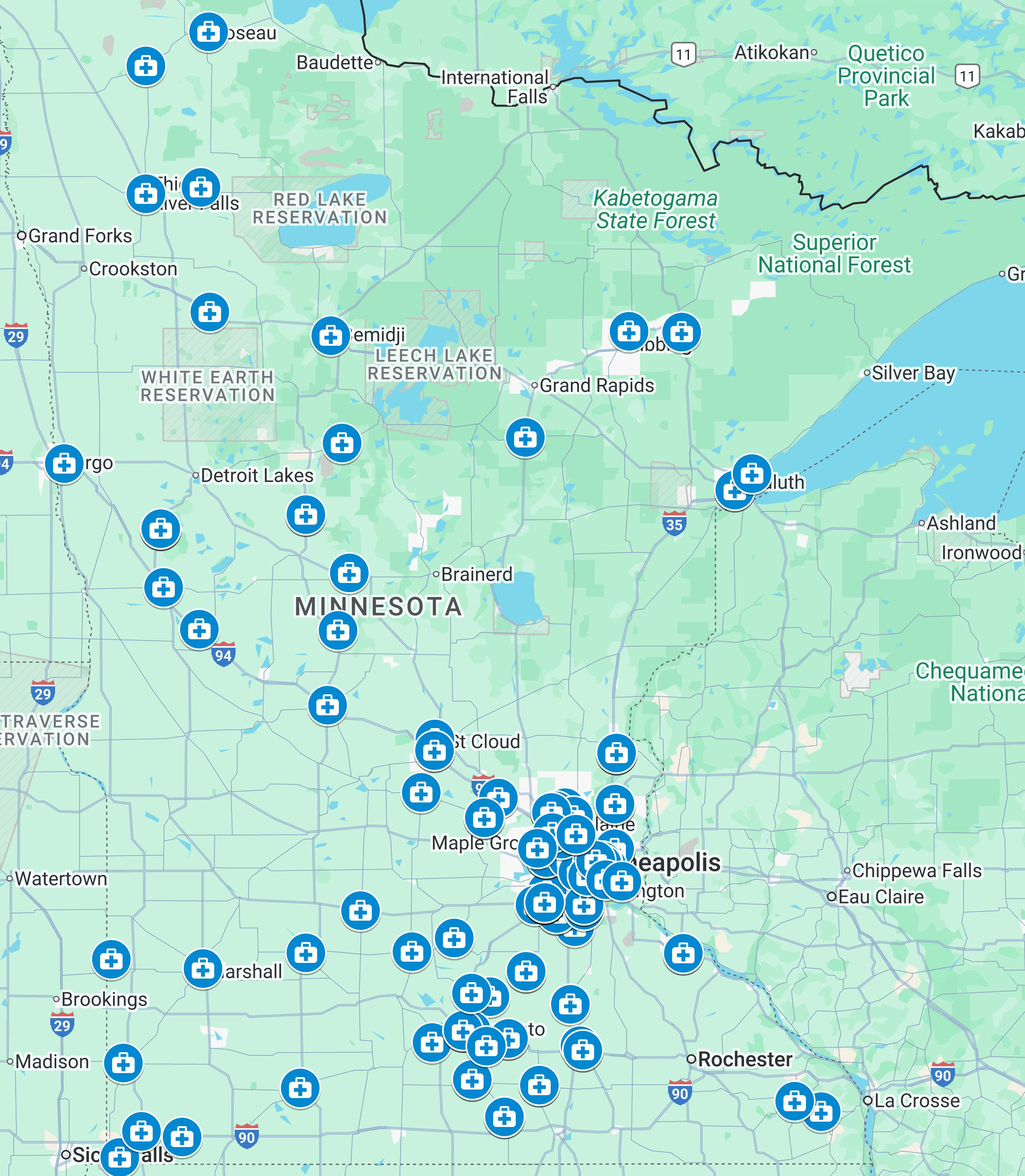
Bemidji, Fosston, Goodridge, Greenbush-Middle River, Nevis, Roseau, and Thief River Falls.

Chisholm, Duluth, Hill City, and Rock Ridge (Virginia).

Browerville, Sebeka, and Staples-Motley.

Ashby, Fergus Falls, Moorhead, and Pelican Rapids.

Kimball, Monticello, North Branch, Sauk Centre, St. Cloud, and Wright Technical Center (Buffalo).

Anoka-Hennepin, Burnsville-Eagan-Savage, Forest Lake, Intermediate 287 (Plymouth), Lakeville, Minneapolis, Northeast Metro 916 (White Bear Lake), Osseo, Prior Lake-Savage, Rosemount-Apple Valley-Eagan, Saint Paul, Shakopee, South St. Paul, South Washington County (Woodbury), Southwest Metro Intermediate 288 (Shakopee), Spring Lake Park, and Wayzata.

Adrian, Buffalo Lake-Hector-Stewart, Hendricks, Hills-Beaver Creek, Luverne, Marshall, Pipestone, Redwood (Redwood Falls), and Windom.

Cleveland, GFW (Winthrop), Janesville-Waldorf-Pemberton, Lake Crystal-Wellcome Memorial, Mankato, Maple River (Mapleton), NRHEG (New Richland), Sibley East (Arlington), St. Clair, St. Peter, Tri-City United (Montgomery), and United South Central (Wells).

Faribault, Houston, Owatonna, Red Wing, and Rushford-Peterson.


Healthcare, Human Services, Public Safety, and Education State Leadership and Professional Organizations

Minnesota association for career and Technical Education

local health/HUMAN SERVICES Teachers organization is coming soon

Coming Soon

Healthcare, Human Services, Public Safety, and Education Teacher Preparation

PELSB – Portfolio Pathway

Licenses:

Introductory mentoring and induction for secondary teachers new to the profession who need support with foundations of CTE and basic pedagogy/instruction, most often Tier 1 and Tier 2 teachers. CTE TIP offers free curriculum, mentoring, professional development, and resources.

Advanced mentoring and induction for those who have recently completed a teacher preparation program (Tier 3) or those who have completed CTE-TIP (Tier 2 or Tier 3) and need license-specific support to build a program, design and adopt curriculum, and enhance their teaching and pedagogy.

Free mentoring, curriculum, and support from a program with more than 20 years of success.

Additional Healthcare, Human Services, Safety, and Education Resources

Minnesota State hosts eight Centers of Excellence – each serving a major industry that faces serious workforce challenges. The centers collaborate with industry and educators to attract and prepare students for success in high-demand careers.

Strategically located throughout the state, the Minnesota State Centers of Excellence drive workforce innovation through education and industry collaboration – and provide thought leadership on workforce development in their respective industries.

The Minnesota Department of Education administers rule and funding unique to CTE, including federal Perkins (under sole source agency Minnesota State) and CTE revenue. The MDE state specialist for Healthcare, Human Services, Public Safety, and Education is Jenny Neiss.

The nine Service Cooperatives are regional governments and school districts under Minnesota State Statute 123A.21. The cooperatives work as a liaison to state agencies and districts and have strong partnerships with business and industry, postsecondary institutions, and other associations that provide opportunities for Minnesota districts, teachers, and students.

The Cooperatives partner to form the MN CTE Consortium to provide statewide services in CTE teacher licensure, induction/mentoring, and professional development under Minnesota State Statute 124D.4536.

Minnesota State colleges and Minnesota school districts were self-formed in 2008 to promote collaborative planning and implementation of Career and Technical Education programs through the Perkins federal grant. Each consortium has at least one Minnesota State college and one school district, including charter schools. 

Healthcare, Human Services, Safety, and Education Frequently Asked Questions

A: Medical Careers (300300), Early Childhood Careers (300500), Cosmetology Career Pathways (092602), Law Enforcement Career Pathways (092603), and Work‑Based Learning (160000).

A: Lakes Country Service Cooperative.

A: Medical terminology, health careers exploration, nursing assistant training, clinical services, CPR and first aid, mental health, child care, law enforcement, cosmetology, public health, and more.

A: HOSA.

A: Yes. A local school board may determine that a Healthcare, Human Services, Public Safety, and Education course meets standards for science credit (earth and space science, chemistry, or physics) if all applicable standards are satisfied. Healthcare, Human Services, Public Safety, and Education courses cannot replace biology.

A: Student‑operated wellness clinics, childcare centers, cosmetology operations, school‑based CPR certification programs, and health education fairs.

A: Yes. Under Minnesota Rule 8710.8040, a candidate for licensure as a teacher of medical careers must hold or have held licensure or certification to practice in a medical career and must have direct practical experience as a medical professional. PELSB defines what qualifies as a medical professional. CNA experience alone does not meet this requirement because CNAs provide personal care, not medical treatment or diagnosis.

A: Minnesota does not have state-level CTE standards. Instead, under Minnesota Statutes, section 120B.022, subdivision 1a, local school districts must adopt standards for their CTE programs. Districts must base these on national CTE standards, national industry standards, or the Minnesota CTE frameworks when creating their local standards. See the Resources page on the MN CTE website for more information and links to these standards and frameworks.